Best Ways to Avoid Spam Filters in Email Marketing

How to Avoid Spam Filters in B2B Emails

Your campaign went out at 9:14 on a Tuesday. Open rate came back at 4%. Nobody replied, nobody unsubscribed, nobody complained — and that silence is the tell, because real audiences at least push back. What probably happened is that a filter made its decision about you somewhere in the handshake, long before your subject line got a vote.

That’s the annoying truth about B2B email marketing right now. Copy is rarely the culprit. Setup is. And once you understand which signals the mailbox providers weigh, the whole problem of how to avoid spam filters in B2B emails stops feeling like superstition and starts feeling like plumbing.

Authentication Is the Gate, And It’s Not Optional Anymore

Three DNS (Domain Name System) records decide whether receivers even bother evaluating your content.

SPF (Sender Policy Framework) lists the servers allowed to send as you. Watch the ten-lookup limit; agencies blow past it constantly because every new tool wants its own include, and once you exceed it the whole record fails silently. DKIM (DomainKeys Identified Mail) signs the message so it can’t be tampered with in transit; use a 2048-bit key, sign with your own domain rather than your ESP’s shared one, and rotate it now and then. DMARC (Domain-based Message Authentication, Reporting and Conformance) sits on top and tells receivers what to do when something fails. Start at p=none with a reporting address, actually read the aggregate reports for a few weeks, then tighten to quarantine or reject once you’ve found the legitimate senders you forgot about. There’s always one. Usually it’s the billing system.

Google and Yahoo made all three mandatory for senders above 5,000 messages a day back in February 2024. Microsoft brought Outlook.com, Hotmail, and Live in line in May 2025, routing non-compliant bulk mail to Junk with outright rejection as the stated endgame. Add valid reverse DNS on your sending IPs and TLS on the connection while you’re in there. Boring work. Enormous payoff.

What Are the Actual Sender Requirements in 2026?

People search this constantly, so here’s the working baseline for how to avoid spam filters in email marketing 2026, minus the padding.

You need SPF, DKIM, and DMARC passing, with your visible From domain aligned to the domain doing the signing. Commercial mail needs a one-click unsubscribe header (RFC 8058), and you need to process those opt-outs within two days rather than “next batch.” Your spam complaint rate in Google Postmaster Tools has to stay under 0.3%; treat 0.1% as your real ceiling, since 0.3% is where consequences start, not where they begin being measured. CAN-SPAM still wants honest headers, a genuine physical postal address, and a working opt-out. And your sending domain should have a live website behind it, some age on it, and a warming history — not a registration date from eleven days ago.

You’ll notice nothing on that list involves avoiding the word “free.” Keyword filtering was a 2007 problem. Modern classifiers score behavior.

Does List Quality Really Decide Inbox Placement?

More than anything else you control, yes.

Hard bounces tell receivers you didn’t verify. Keep them under roughly 2% and verify again before every serious deployment, because a file that was clean in March is not clean in July. Spam traps do the real damage: recycled traps are abandoned real addresses that blocklist operators repurposed, and they punish stale data specifically. Pristine traps were never valid addresses at all, which means if you’re hitting those, scraped data got into your pipeline somewhere, and you should go find out where.

Suppress role accounts — info@, sales@, admin@ — unless your offer genuinely serves them. Retire contacts who’ve ignored a dozen consecutive sends. Engagement history feeds reputation scoring at both Gmail and Microsoft now, so a large unresponsive segment isn’t neutral ballast; it’s a drag coefficient.

One measurement caveat worth internalizing. Apple’s Mail Privacy Protection has been inflating open rates since 2021, which means your open column is mostly decorative. Clicks, replies, and forwards are what survive. Those are also the behaviors filters read as consent.

On the legal side, let’s be straightforward, since anyone buying data deserves the real version. In the US, CAN-SPAM permits cold B2B outreach provided you identify yourself accurately, don’t disguise the commercial nature, publish a valid postal address, and honor opt-outs within ten business days. Canada’s CASL (Canada’s Anti-Spam Legislation) and the EU’s GDPR (General Data Protection Regulation) are considerably stricter and run on different consent logic. So segment by jurisdiction and mail accordingly instead of pretending one policy covers the planet.

Build the Message So a Machine Can Parse It

Content matters, just not the way folklore says.

Send multipart MIME with a plain-text alternative — a fair number of gateways still score you on whether one exists. An email that’s one giant image with eleven words of copy looks exactly like what spammers shipped for a decade, so keep some real text in there. Kill public link shorteners entirely; bit.ly shares reputation with every bad actor using it, and you inherit their record. Set up a branded tracking domain that matches your sending domain instead.

Then the small stuff, which adds up faster than people expect: malformed HTML, white-on-white text left over from a template, a display name that doesn’t match the sending address, and noreply@ mailboxes that make replying impossible. Fix those, and you’ll avoid email spam filters more consistently than any subject-line trick has ever managed.

Why Does B2B Get Filtered Harder Than B2C?

Because corporate recipients sit behind a second wall. Past the mailbox provider, there’s usually a security gateway — Microsoft Defender, Proofpoint, Mimecast, Barracuda — weighing domain age, URL reputation, attachment behavior, and whether anybody at that specific company has ever engaged with you before.

Which makes the best ways to avoid spam filters in email marketing at the B2B tier mostly about discipline. Warm new domains and IPs over four to six weeks rather than four to six days. Run cold prospecting on a subdomain that never touches transactional, billing, or support mail, so a bad campaign can’t poison your invoices. Keep daily volume roughly steady; a two-week gap followed by a 40,000-message blast looks like a compromised account, because that’s what compromised accounts do. Check Google Postmaster Tools and Microsoft SNDS (Smart Network Data Services) weekly. Check Spamhaus the moment placement dips.

None of that is clever. It’s just consistent, and consistency is what reputation systems are built to reward.

Where INFO DEPOTS Fits

Most deliverability failures start upstream, in the data — which is the part we handle.

INFO DEPOTS builds and maintains B2B and B2C email and mailing files for brands across the USA and internationally. Records are tele-verified, NCOA-processed, merge-purged, and suppression-cleaned before they reach you, which strips out the dead addresses and stale records that generate the bounces and trap hits doing the real damage to your sender score. You can select by SIC and NAICS code, job title and seniority, employee count, revenue band, installed technology, geography, or consumer demographics, so your send stays narrow and relevant instead of wide and expensive.

Pricing sits well under the enterprise data platforms, and our research team runs your counts before you commit anything, so you see the universe size and the available selects up front. Tighter targeting produces stronger engagement, stronger engagement protects your reputation, and that chain is the practical link between good data and how to avoid spam filters in B2B email campaigns.

Run This Before Your Next Send

Confirm SPF, DKIM, and DMARC all pass on a live test to a seed address. Verify the file if it’s older than thirty days. Check that the one-click unsubscribe header exists and actually works. Swap any shortened links for your branded tracking domain. Include the plain-text version. Make sure your postal address and sender identity are visible in the footer. Compare today’s volume against last week’s.

Ten minutes, give or take. Considerably cheaper than rehabilitating a domain that’s already burned, which takes months and a lot of humility.

Teams that get good at avoiding spam filters in email marketing aren’t doing anything exotic. They just stopped skipping steps.

Ready to fix the root cause?

Stop guessing why your campaigns stall out. Get accurate, verified, precisely targeted B2B and B2C data built for real inbox placement. Request your free counts from INFO DEPOTS today, and our research team will show you exactly who you can reach and what it costs. CONTACT US!
Build B2B Email Lists for Tech Companies

How to Build B2B Email Lists for Tech Companies

Picture this. A marketer buys a list in a hurry. Thousands of contacts, cheap, ready to go. Within an hour, half of them bounce. The domain gets flagged. And the few emails that land? They reach people who left those companies ages ago.

That scenario plays out every single day. And it teaches the same lesson every time. The list is everything. You can write the smartest email in the world, but if it reaches the wrong inbox, it dies quietly. So when the question becomes how to build B2B email lists for tech companies, the honest answer is simple. Slow down and get the list right first.

Anyone who has spent real time working with B2B data sees the same mistake over and over. Marketers fall in love with big numbers. Fifty thousand names feel powerful. But a small list of the right buyers beats that giant file every time. It happens again and again.

Here’s what actually works.

1. Start With the Person, Not the Product

Before you touch a single tool, ask one question. Who actually buys from you? Really picture them. The CTO of a fast-growing SaaS company. The IT director at a mid-size firm. The procurement lead who signs off on the deal.

Once you know exactly who you’re after, everything gets easier. You stop guessing. You build B2B email lists for tech companies around real people with real budgets, not a vague crowd. That clarity alone changes the whole campaign.

2. Source Your Data Like It Matters, Because It Does

Let’s be honest. Most cheap data is garbage. It’s scraped, stale, and stitched together from places nobody wants to know about. When you build B2B email lists for tech companies, the source decides your fate before you even hit send.

So find the best B2B contact database that gets refreshed on a real schedule. Ask how often they clean it. Ask where it comes from. Good B2B data isn’t magic. It’s just data that someone actually bothered to maintain.

3. Verify Everything, Then Verify Again

Remember that bounce story? All of it could have been avoided with one step: Verification.

Run every record through email validation and phone checks before anything goes out. Drop the role addresses too; the info@ and sales@ inboxes nobody reads. It feels tedious. It is tedious. But this one habit protects your sender reputation and keeps you out of spam. It’s worth the hour, every time.

4. Segment Before You Write a Single Word

Here’s a mistake that shows up constantly. Someone writes one email and sends it to everyone. A scrappy founder and a bank’s IT head get the same message. Then they wonder why nobody replies.

Split your B2B marketing lists by industry, seniority, region, and where each person sits in the buying cycle. When a message feels written for one reader, that reader notices. Relevance is what makes B2B lead generation actually work.

Why Does a Fresh List Matter So Much?

This question comes up in almost every conversation. And the answer surprises people.

Your list is decaying right now, as you read this. People change jobs. Companies merge. Roles vanish overnight. A list loses roughly 2% of its accuracy every single month. So refresh your B2B data quarterly, no excuses. Set a reminder and treat it like brushing your teeth.

There’s a legal side too. CAN-SPAM here in the US, GDPR for European contacts. Both want a real opt-out that you honor immediately. Clean, permission-based lists keep you safe and keep you trusted. Playing it straight never backfires.

Should You Buy a List or Build One Yourself?

Honestly? The best teams do both, and you should too.

Building your own through content and events gives you loyal, opted-in contacts. It’s a beautiful long game. But it’s slow, and sometimes you need a pipeline this month, not next year. That’s when buying makes sense. A trusted partner hands you the best B2B email lists for technology companies, already checked and ready.

The sharpest teams blend the two. They buy targeted B2B email lists for tech companies for reach, then nurture their inbound leads for depth. That balance keeps the pipeline full while the slow stuff grows quietly in the background.

What Are the Biggest Mistakes Companies Make When Building B2B Email Lists?

Many businesses unknowingly limit their marketing success by making avoidable mistakes.

Some of the most common include:

Buying Cheap, Unverified Databases

Low-cost databases often contain outdated information, duplicate contacts, inactive companies, and generic email addresses. Although they appear cost-effective, they usually lead to poor campaign performance.

Ignoring Data Maintenance

  • Business information changes constantly.
  • Employees change roles.
  • Companies relocate.
  • Organizations merge.

Without routine updates, even a well-built database loses value over time.

Prioritizing Quantity Over Quality

A list containing 10,000 qualified decision-makers is significantly more valuable than one containing 100,000 random contacts.

High-quality B2B marketing lists generate stronger engagement because they connect your message with the right audience.

Failing to Segment Audiences

Every prospect has different priorities. A startup founder thinks differently than a Fortune 500 CIO. Sending identical emails to both audiences reduces relevance and lowers response rates. Instead, tailor your messaging to each audience segment.

Overlooking Compliance

Businesses should respect applicable privacy regulations and maintain responsible data practices.

Using permission-based and responsibly sourced business information strengthens brand trust while protecting long-term marketing performance.

Can AI Help Build Better B2B Email Lists for Tech Companies?

Artificial intelligence has transformed the way businesses identify and engage prospects. However, AI should enhance your strategy, not replace human expertise.

Today, AI-powered tools can analyze millions of business signals, identify buying patterns, enrich company profiles, and recommend high-potential prospects. They also help automate repetitive tasks, allowing marketing and sales teams to focus on meaningful conversations.

Even so, AI cannot guarantee accurate contact information on its own. Human validation remains essential to ensure every record is relevant, current, and compliant.

The most successful organizations combine AI-driven insights with expert data verification. This balanced approach produces cleaner databases and more reliable campaign outcomes.

Where INFO DEPOTS Comes into the Picture

Building and maintaining accurate business databases requires significant time, resources, and expertise. Many organizations simply don’t have the internal capacity to manage this process effectively.

That’s where INFO DEPOTS becomes a trusted partner.

We specialize in helping businesses build B2B email lists for tech companies through high-quality, verified, and regularly maintained business data solutions.

Instead of relying on outdated directories or generic contact lists, we focus on delivering business information that supports targeted marketing and sustainable growth.

Businesses across the United States and international markets benefit from INFO DEPOTS by gaining access to:

  • Verified technology decision-makers
  • Industry-specific audience segments
  • Customized prospect databases
  • Accurate company intelligence
  • Regular data validation and updates
  • Flexible targeting based on job title, industry, company size, and geography

Whether you’re introducing a new SaaS platform, expanding into emerging markets, promoting cybersecurity services, or launching enterprise software, INFO DEPOTS helps connect your business with the audiences most likely to engage.

This targeted approach improves campaign efficiency while helping sales teams spend more time building relationships and less time searching for prospects.

The Takeaway Worth Remembering

Strip away the noise, and it comes down to a few habits. Know your buyer. Source clean B2B data. Verify it. Segment it. Then send something that truly speaks to the person reading it.

That’s the whole secret to how to build B2B email lists for tech companies USA. It isn’t flashy. It just works. And once you feel the difference a clean list makes, blasting strangers stops looking like an option at all.

Ready to stop guessing and start reaching the right people? INFO DEPOTS builds verified B2B email lists for tech companies across the USA and worldwide. Skip the bounces, land in real inboxes, and grow your pipeline with data you can trust. Reach out to us today.

Measure B2B Email Campaign Success

How to Measure the Success of B2B Email Campaigns

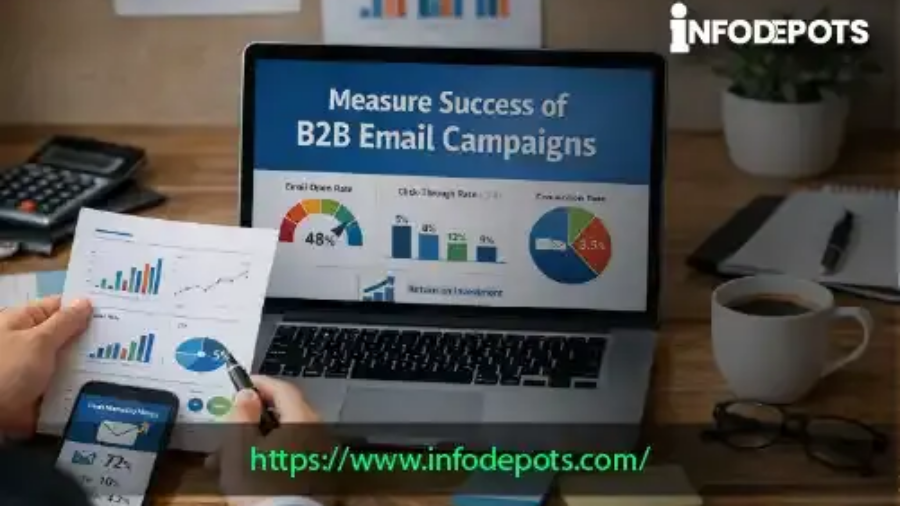
B2B email marketing remains one of the highest-return channels for American businesses today. Yet most marketers still guess what success actually means. Real B2B email campaign measurement goes far beyond opens and clicks. It connects every metric back to pipeline, revenue, and customer relationships.

This guide breaks down the exact metrics, tools, and data foundations that drive measurable results. You will also learn how a clean email marketing database shapes every number you track.

Why B2B Email Campaign Measurement Matters

Every dollar spent on B2B email marketing deserves a clear return. Without measurement, campaigns run on assumptions instead of evidence. That leads to wasted budget and missed opportunities.

Strong B2B email campaign measurement turns guesswork into strategy. It shows which subject lines convert, which segments respond, and which offers actually close deals. It also protects your sender’s reputation over time.

For instance, a single bad send to an outdated list can tank deliverability for months. That is why measurement starts long before you hit send. It starts with the quality of your list and your goals.

Key B2B Email Campaign Analytics Metrics You Need to Track

Solid B2B email campaign analytics rest on a handful of core numbers. Track these consistently across every send.

Open rate shows subject line strength and sender trust. Click-through rate measures content relevance and offer strength. Conversion rate tracks actual leads, demos, or purchases generated. Bounce rate flags list quality and deliverability issues. Unsubscribe rate signals content fatigue or poor targeting. List growth rate shows how fast your database expands organically. Return on investment connects spending directly to closed revenue. The spam complaint rate helps protect your domain’s long-term reputation.

Each metric tells a different part of the story. Together, they show the full picture of campaign health.

How Do You Measure the Success of a B2B Email Campaign?

This is one of the most searched questions in B2B email marketing today. The answer starts with clear, specific goals before launch.

  • First, define what success looks like for this exact campaign. A lead-generation send has different benchmarks than a nurture email.
  • Second, set a baseline using your last three to five campaigns.
  • Third, track performance in real time, not just after the campaign ends.
  • Fourth, segment your results by industry, job title, and company size. This reveals which audiences respond best.
  • Finally, compare results against your baseline and industry benchmarks.

This full process is exactly how to measure the success of B2B email campaigns without guessing.

What Is a Good Benchmark for B2B Email Marketing in 2026?

Industry data generally places average B2B open rates between 15 and 25 percent. Click-through rates typically range from 2 to 5 percent, depending on the industry.

Conversion rates vary widely based on offer strength and list quality. A well-targeted list can outperform these averages significantly. A poorly maintained list will underperform them every time.

Benchmarks matter, but your own historical data matters more. Use industry ranges as a starting point, not a final judgment.

How to Track B2B Email Marketing Performance Over Time

Knowing how to track B2B email marketing performance requires the right tools and consistent habits. Most email service providers offer built-in dashboards for opens, clicks, and conversions.

Pair these with your CRM to track leads through the full sales funnel. This connects email activity directly to closed revenue. A/B testing subject lines, send times, and content also sharpens performance over time.

Review results weekly, not just at the end of a campaign. Small adjustments made early prevent bigger losses later. Consistency in tracking builds a reliable performance history you can trust.

The Power of a Clean Email Marketing Database

No metric matters if your email marketing database is outdated or inaccurate. Bad data skews every number, from open rates to ROI. It also damages the sender’s reputation with major inbox providers.

Quality data lists for marketing should be verified, segmented, and regularly updated. Stale contacts increase bounce rates and hurt deliverability fast. Fresh, permission-based mailing lists for marketing protect your sender score and your budget.

This is where most B2B teams struggle the most. Building and maintaining a clean database takes constant effort and expertise.

Why Your B2B Email List Provider Matters More Than You Think

Choosing the right B2B email list providers shapes every campaign result you will ever measure. A trustworthy provider verifies contacts through multiple channels, not just one. This includes tele-verification, email validation, and regular updates against national change-of-address records.

The best B2B email list providers also offer deep segmentation by industry, title, and company size. This precision drives higher open rates and stronger conversions from day one. Working with an unreliable provider, on the other hand, wastes budget and damages trust.

How INFO DEPOTS Powers B2B Email Success for USA Brands

INFO DEPOTS plays a vital role in helping American brands build measurable B2B email marketing programs. As a trusted data partner, INFO DEPOTS supplies verified, segmented business contact data across countless industries.

Every list undergoes monthly tele-verification and email validation before it reaches a client. This keeps bounce rates low and deliverability strong from the very first send. INFO DEPOTS also supports multi-channel campaigns, connecting email, postal, and telemarketing data in one place.

Beyond raw data, INFO DEPOTS helps businesses with data enhancement, customer profiling, and 360-degree company profiles. This gives marketers the context needed for smarter segmentation and messaging. For USA brands serious about B2B email campaign success, a reliable data partner makes the difference.

Common Mistakes That Skew Your B2B Email Campaign Analytics

Even experienced marketers make avoidable mistakes here. Mixing personal and business email metrics distorts your true performance. Ignoring mobile open rates skews engagement data significantly.

Failing to clean your list regularly inflates bounce and complaint rates. Chasing vanity metrics without checking conversions misleads strategy. Avoid these pitfalls to keep your analytics honest and actionable.

Best Practices for Sustainable B2B Email Marketing Growth

Sustainable growth comes from consistency, not shortcuts. Segment every list before you send. Never blast your entire database at once.

Personalize subject lines and content based on real buyer behavior. Test one variable at a time for cleaner insights. Clean your database on a fixed schedule, not just when problems appear.

Partner with verified B2B email list providers to protect long-term deliverability. Finally, review your metrics monthly and adjust your strategy accordingly. Small, consistent improvements compound into major results over a year.

Ready to turn data into revenue? Partner with INFO DEPOTS for verified B2B email lists that boost open rates, click-throughs, and conversions. Contact us today to start measuring real success.

Best ways to re-engage B2B leads

How to Re-Engage Inactive B2B Leads

Every B2B pipeline has them: contacts who opened three emails, downloaded a guide, then vanished. They didn’t unsubscribe. They simply stopped responding. Learning how to re-engage inactive B2B leads is one of the highest leverage moves a marketing team can make this year, and it costs far less than chasing brand-new prospects.

This guide walks through what causes leads to go cold, the best ways to re-engage them, and how a modern email marketing list built on clean, current data changes the entire equation.

Why Inactive Leads Are Worth the Effort

Cold contacts already know your brand. They filled out a form, attended a webinar, or requested a demo at some point. Consequently, they carry far less friction than a stranger cold-called for the first time.

Reviving a dormant contact typically costs a fraction of acquiring a new one. In addition, a re-engaged lead often converts faster, since the early trust-building work is already done. That is why B2B sales lead re-engagement now sits high on the priority list for revenue teams, right alongside new pipeline generation.

What Actually Makes a B2B Lead Go Cold

Leads rarely disappear because they hate your product. Usually, something more ordinary happens.

  • The buyer’s priorities shifted, or the budget got reallocated elsewhere.
  • Your emails landed at the wrong time in their decision cycle.
  • Outdated contact data meant messages hit a bounced inbox or an outdated job title.
  • Generic messaging failed to speak to their specific role or industry.

Notably, that last point matters more than most teams realize. A CFO evaluating cost impact needs a different message than a technical buyer weighing implementation. Sending both the same note is a fast way to guarantee silence.

How to Re-Engage Inactive B2B Leads: Proven Strategies

1. Segment leads by where they stalled

Not every cold contact deserves the same treatment. A prospect who ghosted after a demo needs a different nudge than someone who downloaded one whitepaper and vanished. Segment your list by last touchpoint, then match the follow-up cadence accordingly. Demo-stage leads respond well to a check-in within 60 to 90 days, while early-stage downloads can wait a bit longer.

2. Lead with what changed, not a generic check-in

“Just following up” rarely earns a reply. Instead, open with something new: a feature launch, a fresh case study, or a shift in their industry that affects them directly. This single change in framing often lifts response rates significantly.

3. Clean and refresh your email marketing list

An outdated email marketing list is the silent killer of any re-engagement campaign. Job changes, company mergers, and email bounces quietly erode list quality over time. Before launching a re-engagement sequence, verify contact records and update job titles, company names, and email addresses. A clean list also protects your sender reputation, which affects deliverability for every future campaign.

4. Use marketing data intelligence to personalize outreach

Modern marketing data intelligence platforms reveal far more than a name and email address. They surface firmographic details, technographic signals, and buying-intent indicators drawn from real-time behavior. Armed with this data, marketers can time outreach around genuine signals, such as a prospect revisiting your pricing page after months of silence. As a result, messages feel timely rather than random.

5. Diversify the channel mix

Email alone rarely revives a fully cold contact. Layer in LinkedIn engagement, retargeting ads, or a short personalized video message. Meanwhile, sales reps can add value through direct, low-pressure outreach that references the prospect’s specific situation. This multi-channel approach keeps your brand visible without feeling repetitive.

6. Score re-engagement activity, then route hot leads fast

When a dormant contact opens three emails in a week or revisits your site, that is a signal worth acting on. Set up lead scoring so these moments trigger immediate sales notification. Speed matters here; a delayed response can undo weeks of careful nurturing.

Best Ways to Re-Engage: A Quick Do’s and Don’ts

Do:

  • Segment by engagement history and buying stage.
  • Personalize subject lines and body copy around the recipient’s role.
  • Test send times and formats across your email marketing list.

Don’t:

  • Send a single blanket “we miss you” email to the entire list.
  • Overload inboxes with daily touches that feel like pressure.
  • Ignore data hygiene before launching any campaign.

The Role of B2B Email Marketing in Winning Back Sales Leads

Despite newer channels, B2B email marketing remains the backbone of most re-engagement efforts. It is measurable, scalable, and easy to personalize at volume. However, its success depends entirely on the quality of the underlying data. Sending polished copy to a bounced or mistargeted address wastes the effort behind it.

This is precisely where accurate, verified sales leads make the difference. A re-engagement campaign built on current firmographic and contact data reaches real decision-makers instead of outdated inboxes. Furthermore, segmentation becomes far more precise when the underlying records reflect a company’s actual size, industry, and structure today.

How INFO DEPOTS Supports Re-Engagement for Businesses Across the USA and Beyond

INFO DEPOTS helps B2B teams solve the data problem at the root of most failed re-engagement campaigns. Our verified databases give marketers accurate, up-to-date contact records across industries, so outreach lands in the right inbox the first time.

Businesses across the USA, and increasingly across international markets, rely on INFO DEPOTS for clean email marketing list builds, firmographic enrichment, and ongoing data hygiene. Rather than guessing which contacts have gone stale, our clients work from data that reflects real-time company changes. This foundation makes every re-engagement sequence, whether email, LinkedIn, or multi-channel, land with far greater accuracy.

Additionally, our marketing data intelligence tools help teams identify which dormant accounts show renewed intent signals worth acting on now. Instead of blasting an entire list, marketers can prioritize the contacts most likely to respond. Ultimately, this turns a scattershot campaign into a targeted, revenue-driving effort.

Turning Silence Into Pipeline

Cold contacts aren’t lost opportunities; they’re a pipeline waiting for the right nudge. With segmented outreach, refreshed data, and messaging that leads with genuine value, dormant leads convert back into active conversations. The strategies above outline how to re-engage inactive B2B leads without wasting budget on outdated lists or generic blasts.

Call to Action

Ready to turn cold contacts into closed deals? INFO DEPOTS delivers the verified, up-to-date B2B data that powers real re-engagement. Let’s refresh your list, sharpen your targeting, and get your pipeline moving again. Talk to us today.

Customer Feedback Email Lists

How to Use Email Lists for Customer Feedback & Surveys

Every successful business decision starts with one thing: real customer insight. Understanding how to use email lists for customer feedback & surveys helps brands make smarter decisions, faster. In fact, email remains one of the most reliable channels for direct, honest customer input. This blog breaks down everything you need to know to turn your inbox into an insight engine.

Why Customer Feedback Still Matters

Customer expectations shift constantly. Therefore, businesses need consistent ways to listen. Email remains a preferred channel because it’s personal, direct, and measurable. Unlike social media polls, emails reach people who already trust your brand. As a result, response quality tends to be higher and more thoughtful.

Additionally, feedback collected through email creates a paper trail. You can track sentiment over time. You can also segment responses by customer type, purchase history, or engagement level. This makes customer feedback email lists incredibly valuable for long-term strategy.

Why Are Email Surveys Still Effective in 2026?

Despite the rise of chatbots and social DMs, email marketing surveys consistently outperform other formats. Here’s why:

  • Emails allow for longer, more thoughtful responses
  • Subscribers can complete surveys on their own schedule
  • Email platforms offer built-in analytics and tracking
  • Personalization increases response rates significantly
  • Automation makes follow-ups effortless

Consequently, brands that master how to use email lists for surveys gain a competitive research advantage without expensive third-party tools.

How to Use Email Lists for Customer Feedback & Surveys: A Step-by-Step Approach

Let’s break this down into an actionable framework.

1. Segment Your Audience First
Before sending anything, divide your email marketing database into meaningful groups. Segment by purchase behavior, location, or engagement level. This ensures your survey questions feel relevant, not generic.

2. Choose the Right Survey Format
Short surveys perform better than long ones. Use rating scales, yes/no questions, or single-word responses whenever possible. For deeper insight, follow up with optional open-ended questions.

3. Personalize the Ask
Use the subscriber’s name. Reference their recent purchase or interaction. Personalized emails see noticeably higher open and completion rates.

4. Time It Strategically
Send feedback requests shortly after a purchase, support interaction, or website visit. Timing significantly affects response accuracy and volume.

5. Automate Follow-Ups
If someone doesn’t respond, a gentle reminder email often doubles completion rates. Automation tools make this simple to schedule in advance.

Best Practices for Building Strong Customer Feedback Email Lists

Quality matters more than quantity here. Consider these best practices:

  • Always collect feedback through permission-based mailing lists for marketing, never purchased contacts
  • Keep your list clean by removing inactive or bounced addresses regularly
  • Offer a small incentive, like a discount, to boost survey participation
  • Test subject lines to see what drives higher open rates
  • Ensure mobile-friendly survey design, since most emails are opened on phones

Moreover, maintaining accurate data lists for marketing ensures that your feedback reflects real customer sentiment rather than outdated or irrelevant contacts.

How Often Should You Send Customer Survey Email Campaigns?

This question comes up constantly in marketing forums and AI search results. The honest answer: it depends on your business type. However, general guidelines apply.

  • Post-purchase surveys: within 3–7 days
  • Customer satisfaction (CSAT) surveys: quarterly
  • Net Promoter Score (NPS) surveys: twice a year
  • Product feedback surveys: after major updates or launches

Sending too frequently causes fatigue and unsubscribes. On the other hand, sending too rarely means missed opportunities for improvement. Balance is key when running customer survey email campaigns.

Turning Feedback into Action

Collecting responses is only half the job. Afterward, businesses must act on what they learn. Otherwise, customers stop responding altogether, sensing their input goes nowhere.

To close the loop effectively:

  • Share updates based on customer suggestions
  • Thank respondents publicly or via follow-up email
  • Track recurring complaints and address them proactively
  • Use survey data to refine products, services, or messaging

This approach not only improves retention but also strengthens brand loyalty significantly over time.

How INFO DEPOTS Helps Businesses Build Smarter Feedback Systems

INFO DEPOTS specializes in helping companies across the USA and beyond build accurate, permission-based email marketing database systems designed specifically for feedback collection and customer engagement.

Here’s how we support businesses:

  • We provide verified, industry-specific data lists for marketing that ensure your surveys reach real, engaged contacts
  • Our team helps clients build targeted customer feedback email lists segmented by industry, role, or behavior
  • We assist in designing customer survey email campaigns that maximize response rates while staying fully compliant with data privacy regulations
  • Our solutions integrate seamlessly with popular email marketing platforms, saving businesses time and resources

Furthermore, INFO DEPOTS focuses on data accuracy above all else. Outdated or incorrect contacts waste marketing budgets and skew survey results. That’s why our lists undergo regular verification, ensuring businesses get dependable, high-quality mailing lists for marketing every time.

Whether you’re a healthcare provider, SaaS company, or retail brand, INFO DEPOTS helps you understand exactly how to use email lists for customer feedback in a way that drives measurable business growth.

Final Thoughts

Mastering how to use email lists for customer feedback & surveys isn’t just a marketing tactic. It’s a long-term strategy for building smarter, customer-centered businesses. By combining segmentation, personalization, and consistent follow-through, brands can transform simple emails into powerful research tools.

Ultimately, the businesses that listen best are the ones that grow fastest.

Ready to build smarter surveys and real customer insight? Partner with INFO DEPOTS today for verified email lists that turn feedback into growth. Let’s connect us now!

Customer Interest Segmentation for Better Conversions

How to Segment Email Lists by Customer Interests for Better Marketing ROI?

Every email campaign starts with a similar expectation. First, you send a message. Next, subscribers open it. Then, they click through. Ultimately, conversions follow. That chain sounds straightforward. In practice, it breaks down at the very first step. Most email campaigns underperform, not because the product is wrong or the offer is weak. They underperform because every subscriber receives the same message regardless of what they actually care about. That mismatch between content and interest is where marketing ROI quietly disappears.

The solution is not a catchier subject line. It is not a brighter template. The solution is knowing how to segment email lists by customer interests and building every campaign around that knowledge. When content matches interest, engagement rises naturally. Clicks increase. Purchase rates improve. And the email marketing list transforms from a contact database into a revenue-generating engine.

What Is Customer Interest Email Segmentation, and Why Does It Define Campaign ROI?

Customer interest email segmentation is the practice of dividing your subscriber base into smaller, focused groups based on demonstrated or stated areas of interest. Instead of broadcasting a single campaign to your entire email marketing list, you identify what distinct audience subsets respond to. Then you serve them content built specifically for those interests.

Interest can express itself in multiple ways. For example, a subscriber who regularly opens emails on a particular topic demonstrates behavioral interest. Similarly, a contact who downloads a resource signals intent through action. Meanwhile, a buyer who repeatedly returns to the same product category reveals sustained purchase interest. Each signal is data. Each data point is a segmentation input. Together, they enable customer interest email segmentation that feels personal rather than automated.

The practical outcome matters most. When subscribers receive content matched to their actual interests, open rates climb. Click-through rates follow. Unsubscribe rates fall. Conversion rates improve across every campaign metric that connects to revenue. That is how to segment email lists by customer interests for better marketing ROI? answered in business terms rather than marketing theory.

Why Generic Email Marketing Is Quietly Destroying Your Conversion Rates

Generic email marketing operates on volume logic. Send it to everyone. Hope enough contacts find it relevant. Measure the aggregate results. Repeat. The problem is that modern subscribers have reached their tolerance limit for irrelevant inbox content. They do not hesitate to unsubscribe. They report emails as spam. They stop opening entirely, even from senders they once trusted.

Over time, this behavior compounds. As a result, sender reputation erodes. Consequently, deliverability scores begin to drop. Eventually, even your relevant emails fail to reach the contacts who genuinely want them. The damage from a one-size-fits-all email strategy is not a single campaign failure. It is a slow degradation of your entire list’s commercial value.

In contrast, marketers who consistently segment email lists by customer interests protect list health while improving campaign performance simultaneously. They send less often but more relevantly. Every send either confirms subscriber interest or qualifies contacts for a different segment. Nothing goes to waste. Custom data from a reliable provider is what makes this level of precision structurally possible rather than theoretically aspirational.

How to Collect the Data Needed for Interest-Based Segmentation

Before you can segment email lists by customer interests, you need data that reveals what those interests actually are. That data arrives through several collection paths, each contributing a different type of signal.

Preference centers at the point of subscription are the most direct method. Give new subscribers the option to self-select their areas of interest before they receive their first email. Keep the options concise and specific to your actual content categories. Contacts who self-identify their interests reduce your downstream segmentation burden immediately.

Campaign behavior analysis builds an interest profile over time without requiring subscriber action. Your email platform records opens, clicks, scroll behavior, and forwarding activity at the individual contact level. When a subscriber consistently engages with one topic category and ignores others, that pattern is a segmentation signal you can act on directly.

Website behavior adds a further layer. A contact who repeatedly visits your pricing page for one product line is not neutral. They are demonstrating purchase intent toward a specific interest category. Connecting web analytics to your email marketing list platform closes the loop between on-site behavior and email segmentation decisions.

Custom data from an external B2B provider fills the gaps your own platform cannot capture internally. Firmographic details, industry classification, job function, company revenue, technology footprint, and geographic region all contribute to interest inference for contacts who have not yet demonstrated explicit behavioral signals in your own campaigns.

The Most Effective Methods to Segment Email Lists by Customer Interests

Several proven segmentation approaches consistently produce measurable improvements in customer interest segmentation for better conversions. Understanding each one helps you build a layered model rather than relying on a single dimension.

Interest category tagging assigns each subscriber to one or more content topics based on behavioral and stated preference data. As contacts engage with your campaigns, relevant tags accumulate. Dominant tags over time define each subscriber’s primary interest profile and drive content selection for subsequent sends.

Engagement frequency segmentation separates active subscribers from passive and disengaged contacts. Active subscribers with high open and click rates receive your most conversion-focused content. Passive contacts receive lighter nurture content designed to restore engagement before moving them to inactive status.

Psychographic segmentation groups contacts by professional mindset, organizational role in buying decisions, and priority orientation. This layer goes beyond job title. Two contacts with identical titles at similar companies may have completely different priorities depending on their internal mandate. Psychographic data, often available through enriched custom data records, captures these distinctions.

Purchase and inquiry history segmentation builds audience groups around what contacts have already demonstrated willingness to buy or explore. A B2B contact who requested a quote for one service category is a distinct segment from a contact who has only engaged with educational content. Their email journey should reflect that behavioral difference precisely.

What Is the Right Segmentation Depth for Your Email Marketing List?

This question appears frequently among B2B marketers beginning a structured segmentation program. The correct answer is: segment as deeply as your content capacity allows. Over-segmentation is a real risk. Creating fifteen micro-segments produces fifteen distinct content tracks. That workload quickly exceeds most team capacities.

A practical starting framework for most B2B email marketing list programs involves three to five primary interest segments aligned with your core offering areas. Each segment receives its own campaign track, its own content calendar, and its own conversion pathway. As campaign data accumulates and your team’s content production scales, additional segments can be added incrementally based on observed engagement patterns.

The data supporting those segments must also be current. Interest-based segments built on six-month-old behavioral data no longer reflect your subscribers’ actual current priorities. Regular segment reviews, at a minimum quarterly, keep your customer interest email segmentation aligned with where your audience is today, rather than where they were at the time of initial data collection.

How INFO DEPOTS Is Helping USA Businesses Segment Smarter and Convert More

For USA businesses operating in competitive B2B markets, INFO DEPOTS plays a direct and practical role in making customer interest segmentation for better conversion operationally feasible. INFO DEPOTS is a specialized B2B and B2C mailing list and custom data provider built to serve American businesses with verified, multi-field contact records that go well beyond basic name and email pairs.

The distinction that INFO DEPOTS brings to customer interest email segmentation is structural depth within the data itself. Each contact record in our email marketing list includes detailed demographic and firmographic fields. Industry classification, job function, seniority level, company size, annual revenue range, geographic location, and technology usage context are available depending on the specific list selected. That field depth allows segmentation to begin before the first campaign is ever sent.

USA businesses using INFO DEPOTS do not need to wait months for behavioral data to accumulate before creating meaningful interest segments. The contact data arrives pre-structured with the attributes needed to build initial segments immediately. A healthcare technology vendor can separate hospital administrators from clinical IT managers before their first send. A financial services firm can isolate CFOs from compliance officers within the same industry target. That immediate segmentation capability compresses the time between list acquisition and campaign performance.

INFO DEPOTS also builds fully custom data solutions for businesses whose target audience sits at the intersection of specific criteria that standard list categories do not cleanly capture. If your ideal prospect combines a specific industry, a particular company revenue range, a defined technology environment, and a specific geographic region, we build that exact audience rather than offering a general approximation. This custom capability consistently separates us from generic list vendors in the USA market.

Furthermore, we maintain our databases through regular verification cycles. Email addresses are validated. Phone records are checked against active carrier data. Company information is updated to reflect organizational changes. The result is a custom data foundation that sustains segmentation accuracy across the full timeline of a structured nurture or conversion program, not just its opening sends.

Measuring Whether Your Interest Segmentation Is Actually Improving ROI

Measurement closes the loop between segmentation strategy and business outcome. Four metrics directly address how to segment email lists by customer interests for improved marketing ROI, in terms suitable for reporting to leadership.

Segment-level open rate reveals whether your interest category assignments are resonating. When one segment consistently outperforms another at an open rate, the content-to-interest alignment is stronger for that group. The insight is actionable: replicate the approach across underperforming segments.

Click-through rate by segment measures whether body content delivers on the subject line’s promise. High open rates with low click rates indicate a disconnect between the headline and offer. Resolving that disconnect within a specific interest segment improves conversion rates without expanding the list.

Conversion rate by segment is the most direct revenue metric available in a segmented customer interest email segmentation program. It identifies which interest groups are most commercially active right now and which require longer nurture timelines before they are ready for a direct sales conversation.

The list growth rate by interest segment tells you which content categories are generating new subscriber demand organically. Strong content in a well-matched interest segment gets shared and referenced. New subscribers entering through that content are pre-qualified leads before they ever fill out a form.

Common Segmentation Errors That Quietly Reduce Campaign Returns

Even well-intentioned segmentation programs make errors that erode the ROI gains they were designed to produce. Knowing them upfront prevents costly course corrections later.

  • Building segments on assumptions rather than data is the most common mistake. Assuming that all contacts with a specific job title share the same interests ignores the behavioral, psychographic, and contextual variation within any professional category. Always anchor segments to data signals rather than demographic proxies.
  • Treating segmentation as a one-time setup rather than an ongoing process is equally damaging. Subscriber interests shift. Business priorities change. Contacts move through buying stages. A segment structure valid at program launch needs regular review to remain accurate six months later.
  • Ignoring disengagement signals from within specific segments is the third consistent error. When open rates for one interest segment begin declining, that decline is a content relevance signal. Treating it as a data quality issue delays the necessary content adjustment and accelerates subscriber attrition from an otherwise valuable audience group.
Ready to Segment Smarter? Start with INFO DEPOTS Today!

Stop sending one message to every contact and watching conversions flatline. INFO DEPOTS delivers verified B2B and B2C mailing lists and custom data designed for precise customer interest email segmentation across the USA markets. Contact us today and launch campaigns that actually convert.

Top Email Marketing Software for Lead Generation

How Do High-Quality Email Lists Improve Lead Generation Results?

Email remains the highest-performing channel for B2B and B2C growth. However, the channel only works when your list is clean. A flawed list quietly drains budget, sender reputation, and momentum. In contrast, a verified, well-targeted list compounds results month after month.

Below, you will learn why list quality drives outcomes. Moreover, you will see how the right tools and partners accelerate your pipeline. Let’s break it down clearly and practically.

Why Does List Quality Matter More Than List Size?

Marketers often chase volume. Yet bigger is rarely better in outreach. A bloated list with stale records hurts deliverability. Consequently, your best messages land in spam folders.

High-quality lists flip that equation entirely. First, accurate records reach real inboxes. Second, relevant targeting earns replies instead of complaints. Third, engaged contacts protect your domain reputation over time.

Think of every record as a future sales lead. A verified contact has a real job, company, and need. Therefore, your message arrives with context and timing on your side. As a result, conversion rates climb without inflating your send count.

Quality also reduces wasted effort across your funnel. Your reps stop chasing dead emails and disconnected numbers. Instead, they focus on prospects who can actually buy. Ultimately, that focus shortens your sales cycle measurably.

How Do High-Quality Email Lists Improve Lead Generation?

Strong lists improve four metrics that matter most. These include deliverability, open rates, reply rates, and pipeline velocity. Let’s examine each benefit in plain terms.

  • Better deliverability comes first. Verified addresses bounce far less often. Subsequently, mailbox providers trust your domain and deliver your inbox reliably.
  • Sharper targeting follows close behind. Quality data includes firmographic and demographic filters. Because of that, you reach decision-makers by title, industry, and region. In turn, your relevance score rises with every campaign.
  • Stronger personalization becomes possible, too. Rich records let you tailor offers to real pain points. Meanwhile, generic blasts feel cold and forgettable. Personalized outreach, however, builds trust quickly and naturally.
  • Faster pipeline growth is the final payoff. When each contact fits your buyer profile, replies multiply. Eventually, more replies mean more meetings have been booked. Therefore, revenue follows the quality of your input.

What Are the Best Email Marketing Platforms for Lead Generation?

Tools matter once your data is solid. Many teams research the best email marketing platforms for lead generation before scaling. That instinct is smart, because workflow and data must work together.

Popular email marketing platforms for lead generation include Mailchimp, HubSpot, ActiveCampaign, and Brevo. Additionally, Smartlead and Instantly serve high-volume cold outreach well. Each platform offers automation, segmentation, and reporting at different price points.

For complex pipelines, dedicated B2B email marketing platforms for lead generation add deeper CRM features. For example, they sync deals, score contacts, and trigger sequences automatically. Consequently, your team works from one source of truth.

Robust email marketing software also protects your sender health. Specifically, it warms inboxes, rotates domains, and monitors bounces. As a result, your campaigns stay compliant and consistent.

Still, the top email marketing software for lead generation cannot fix bad data. Even the finest engine stalls without quality fuel. Therefore, pair your platform with a verified, targeted list. Together, they produce predictable, repeatable results.

What Makes a List Truly “High-Quality”?

Not every vendor list deserves your trust. Accordingly, you should judge quality against clear standards. Here are the markers that separate strong lists from risky ones.

A high-quality list is accurate above all. Each record undergoes regular email validation and phone checks. Furthermore, monthly tele-verification keeps contact details current.

It is also compliant by design. Reputable lists respect CAN-SPAM, GDPR, and CCPA rules. In addition, opt-in sourcing protects your brand from legal exposure.

It must be relevant, too. The contacts should match your exact target market. Otherwise, even verified records waste your spend.

Finally, it should be fresh. Job changes happen constantly across every industry. Hence, lists need frequent updates and NCOA processing. Without freshness, accuracy fades within months.

How Does Custom Data Beat Generic Lists?

Off-the-shelf lists serve broad audiences poorly. By contrast, custom data targets your precise buyer. This distinction often decides campaign success.

Custom records are built around your criteria. For instance, you might filter by revenue, technology stack, or hiring trends. Then, you reach only the accounts that fit. Subsequently, your message resonates instead of annoying recipients.

A skilled lead generation service assembles this data carefully. Moreover, it layers multiple verification steps for confidence. As a result, you receive a focused list, not a bloated database. That focus directly improves your reply and conversion rates.

How INFO DEPOTS Helps You Generate Potent Leads

This is where INFO DEPOTS makes a measurable difference. We help businesses across the USA and beyond grow faster. Specifically, we deliver customized, compliant B2B and B2C email and mailing lists. Best of all, we price them cost-effectively for real ROI.

Our process starts with your ideal customer profile. Next, we build custom data matched to your goals. Then, we verify every record through monthly tele-verifications and email validations. Consequently, you receive a clean, ready-to-use sales lead list.

We also keep compliance at the center of our work. Our lists align with CAN-SPAM, GDPR, and CCPA standards. Therefore, you can launch campaigns with full confidence.

Furthermore, our data plugs into any platform you prefer. Whether you use HubSpot, Smartlead, or another tool, integration stays simple. As a complete lead generation service, we support postal, email, and telemarketing outreach. In short, we fuel your funnel while you focus on closing.

How Do You Combine Data and Tools for Maximum Results?

Success comes from pairing quality data with capable software. First, define your target audience precisely. Second, source verified contacts that match it. Third, choose a platform built for your volume and goals.

Afterward, personalize every message with real context. Then, monitor deliverability and engagement closely. Finally, refine your segments based on responses. Over time, this loop steadily sharpens your pipeline.

When these pieces align, growth becomes predictable. Your inputs stay clean, and your outputs stay strong. Ultimately, high-quality lists turn outreach into reliable revenue.

Ready to Power Your Pipeline?

Stop wasting sends on stale, risky data. Instead, fuel your campaigns with verified, compliant, custom-built lists. INFO DEPOTS delivers targeted B2B and B2C contacts at unbeatable value. Contact INFO DEPOTS today and turn quality data into qualified leads, faster.

12-06-2026-web-Top-Companies-Using-Salesforce-CRM-in-the-USA (1)

Top Companies Using Salesforce CRM in the USA

Salesforce powers the engine behind America’s most ambitious brands. From retail giants to global banks, its footprint is massive. Therefore, marketers everywhere want to know exactly who depends on it.

This guide reveals the top companies using Salesforce CRM in USA right now. Moreover, it shows you how to reach them. So, let us dive straight in.

Quick answer: Salesforce is the world’s #1 CRM platform. Furthermore, around 90% of Fortune 500 firms rely on it. As a result, the list of companies using Salesforce CRM in USA reads like a who’s-who of business.

Why Salesforce CRM Dominates the American Market

Salesforce has ranked as the #1 CRM provider for thirteen straight years. In addition, it holds roughly 20% of the global CRM market. That share beats its closest rivals combined.

Notably, it serves more than 150,000 customers worldwide. Most of those customers are based in the United States. Consequently, American adoption sits at the very heart of its growth.

Its fiscal year 2025 revenue reached about $37.9 billion. Therefore, no competitor comes close in scale or trust. This dominance explains why the top companies that use Salesforce CRM keep multiplying.

The Real List of Companies Using Salesforce CRM

Below sits a widely reported list of companies using Salesforce CRM. These brands span finance, tech, retail, healthcare, and logistics. Notably, each one leads its own industry.

  • Amazon Web Services (AWS) — the cloud computing leader.
  • Walmart — the nation’s largest retailer.
  • American Express — premium financial services powerhouse.
  • U.S. Bank — a major American banking group.
  • T-Mobile — telecom and connectivity giant.
  • IBM — enterprise technology pioneer.
  • Pfizer — global pharmaceutical innovator.
  • Marriott International — hospitality and travel leader.
  • Dell Technologies — computing and hardware specialist.
  • FedEx — logistics and shipping backbone.
  • PepsiCo — food and beverage titan.
  • Williams-Sonoma — home and lifestyle retailer.
  • NASA — pioneering federal space agency.

Together, these names prove one point clearly. The best companies using Salesforce CRM in USA trust the platform daily. However, the full universe stretches far beyond thirteen brands.

Which Industries Rely on Salesforce CRM the Most?

Salesforce serves nearly every sector imaginable. Still, a handful clearly lead the pack.

  • Professional services hold the biggest share.
  • Manufacturing follows close behind.
  • Financial services rank a strong third.
  • Retail and consumer goods round out the top tier.

Because adoption spans industries, the companies using Salesforce CRM in USA are remarkably diverse. Therefore, smart marketers can target several verticals at once. In short, opportunity exists everywhere.

Why Do Top Companies Choose Salesforce CRM?

It is a fair question — and the answer is simple. Salesforce blends data, automation, and AI in one place.

First, it centralizes all customer interactions. Second, it automates slow, repetitive manual tasks. Third, its Einstein AI predicts buyer behavior accurately. Above all, it scales smoothly from startup to enterprise.

For example, businesses earn about $8.71 for every $1 spent on CRM. Consequently, leadership teams see a clear and fast payoff. That is precisely why the top companies using Salesforce CRM rarely switch away.

How Can You Reach Companies Using Salesforce CRM in USA?

Knowing who uses Salesforce is only half the battle. Next, you actually need a way to contact them.

This is where a verified Salesforce CRM Users List changes everything. With one in hand, you skip the guesswork completely. Instead, you connect straight to qualified decision-makers.

Meanwhile, generic outreach wastes both time and budget. Therefore, precise B2B marketing lists deliver far stronger returns. Ultimately, quality data fuels a quality pipeline.

How INFO DEPOTS Delivers a Compliant Salesforce CRM Users List

At INFO DEPOTS, we turn buyer intent into real action. We are a trusted B2B mailing list provider serving the USA and beyond.

Our team builds a customized Salesforce CRM Users List around your exact goals. Furthermore, every record is human-verified and fully compliant. We honor CAN-SPAM, GDPR, and CCPA standards strictly.

Each list is tele-verified and refreshed every month. As a result, your campaigns reach real, active, in-market buyers. Bounce rates drop, and engagement climbs steadily.

In addition, we tailor every field to your niche. You choose industry, job title, location, and company size. Consequently, your data lists for marketing match your perfect buyer profile.

We also enrich each contact with multichannel details. Therefore, you can run postal, email, and phone outreach together. One clean dataset powers your entire funnel.

Above all, our B2B marketing lists stay accurate and responsive. We remove stale records before they ever cost you money. In short, you pay only for data that performs.

What Makes INFO DEPOTS Different?

Many providers quietly sell recycled, outdated files. We do the exact opposite, every single time.

INFO DEPOTS prioritizes freshness, compliance, and precision. Moreover, our list of companies using Salesforce CRM in USA is built from authoritative sources. You receive only legitimate business contacts.

Our pricing stays transparent and flexible. Additionally, we offer sample test files before any full purchase. Thus, you validate quality with zero risk.

From scrappy startups to global enterprises, brands trust our data lists for marketing. Ultimately, we help you generate potent, sales-ready leads that convert.

Ready to Connect with Salesforce-Powered Brands?

Ready to reach the top companies using Salesforce CRM in USA? Partner with INFO DEPOTS today. Get a customized, compliant, and verified Salesforce CRM Users List built for real results. Boost your leads, conversions, and ROI fast. Contact INFO DEPOTS now and start closing bigger deals!

Best USA Companies Using Oracle ERP

Top USA Companies Using Oracle ERP

Oracle ERP forms the financial backbone of countless American enterprises today. Moreover, it powers planning, procurement, accounting, and reporting at massive scale. Therefore, identifying the top USA companies using Oracle ERP matters greatly for B2B marketers. Indeed, these firms represent high-value accounts with serious buying authority.

In this guide, we break down the landscape clearly and accurately. Furthermore, we highlight the latest adoption trends shaping the market. Above all, we will explain how INFO DEPOTS helps you reach these exact buyers.

Why Oracle ERP Dominates American Enterprises

Oracle continues to expand across the finance, manufacturing, retail, and healthcare verticals. Notably, Oracle reported fiscal 2025 total revenue of $57.4 billion, up 8%. In addition, Fusion Cloud ERP revenue reached about $1.0 billion in a single quarter, up 22%. Consequently, adoption keeps climbing across large and midsize organizations.

Companies choose Oracle ERP for automation, accuracy, and real-time insight. Meanwhile, cloud updates arrive automatically without painful manual upgrades. As a result, finance teams move faster and report with confidence. Thus, Oracle has become a default choice for ambitious enterprises.

What Companies Use Oracle in the USA?

Let us answer the question of “what companies use Oracle in the USA?” with verifiable examples.

For instance, Western Digital trusted Oracle Fusion Cloud ERP after major acquisitions created disparate processes. Similarly, Discover Financial Services consolidated seven legacy on-premises systems onto Oracle Fusion Cloud ERP in 2019. Likewise, Land O’Lakes, Fortune Brands Innovations, and Hypertherm adopted Oracle Fusion Cloud applications.

These names show the breadth of companies that use Oracle ERP in the USA market. Furthermore, they span manufacturing, finance, consumer goods, and technology. Therefore, the buyer pool stays diverse and genuinely lucrative.

List of Companies Using Oracle ERP

Below is a representative list of companies using Oracle ERP across major sectors. However, treat this snapshot as illustrative rather than exhaustive.

  • Western Digital — data storage and electronics manufacturing.
  • Discover Financial Services — credit cards and consumer banking.
  • Land O’Lakes — consumer packaged goods and agriculture.
  • Fortune Brands Innovations — home and security products.
  • Hypertherm — industrial cutting technology.

Each example reflects a public reference, case study, or testimonial. Additionally, thousands of midmarket firms run Oracle quietly behind the scenes. Consequently, the true market reach far beyond household names.

Which Are the Best USA Companies Using Oracle ERP?

Buyers often search for the best USA companies using Oracle ERP by measurable impact. Generally, the strongest adopters combine scale with smart, disciplined implementation. For example, Discover unified fragmented systems to fix slow and inaccurate reporting. Meanwhile, Western Digital used Oracle Cloud ERP updates to modernize features quickly.

Therefore, “best” usually means efficiency gains, not merely brand size. In short, real results define leadership in this space. Above all, smart execution separates winners from average adopters.

Why Do These Companies Outperform Their Rivals?

Companies that use Oracle ERP gain a structural advantage quickly. First, they automate manual finance and supply chain tasks. Next, they unify scattered information into one trusted source. Finally, they make decisions using live, accurate dashboards.

As a result, these firms reduce errors and shorten closing cycles. Additionally, they scale smoothly as revenue and complexity grow. Thus, Oracle ERP becomes a genuine competitive lever, not just software. Because of this, adoption continues spreading across ambitious American industries.

How Can Marketers Reach Oracle ERP Customers?

Here lies the real opportunity for B2B sellers and service providers. After all, every Oracle ERP user needs consultants, integrations, and add-ons. Consequently, a clean and accurate Oracle ERP customers list becomes pure gold.

However, accuracy decides everything in modern outreach. Indeed, outdated records waste budget and damage your sender reputation. Therefore, marketers need verified, compliant, and segmented data instead. Otherwise, even great offers reach the wrong inboxes.

How INFO DEPOTS Powers Your Oracle ERP Outreach

This is precisely where INFO DEPOTS plays a vital role. Specifically, we will build a customized and compliant Oracle ERP customers list for you. Moreover, we will tailor it to your exact target market across the USA.

Our team verifies every record through monthly tele-verifications and email validations. As a result, your B2B email list stays fresh, deliverable, and dependable. In addition, our B2B mailing list supports postal, email, and telephone campaigns together. Therefore, you run true multi-channel outreach from one trusted source.

Furthermore, we never sell generic, one-size-fits-all files. Instead, we deliver custom data matched to your industry, role, and region. For example, you can target CFOs, IT directors, or procurement leaders directly. Likewise, you can filter by company size, revenue, or location.

We also align every record with leading privacy and compliance standards. Consequently, your campaigns stay safe and reputation-friendly. Above all, you reach decision-makers who genuinely influence Oracle ERP spending.

With INFO DEPOTS, you skip costly guesswork entirely. Instead, you launch campaigns backed by accurate, multi-channel intelligence. As a result, your pipeline fills with qualified, high-value accounts faster.

What companies use Oracle in the USA?

Major examples include Western Digital, Discover Financial Services, and Land O’Lakes. Furthermore, many midmarket firms rely on Oracle too.

Where can I get a list of companies using Oracle ERP?

INFO DEPOTS provides a verified, customized, and compliant list directly. Therefore, you save research time instantly.

Why choose custom data over generic lists?

Because targeted custom data converts far better than broad, untargeted files. Thus, your ROI improves dramatically.

Ready to Connect with Oracle ERP Buyers?

Want to reach the top USA companies using Oracle ERP? Partner with INFO DEPOTS today. Get a customized, verified, and compliant Oracle ERP customers list built for your goals. Boost conversions with an accurate B2B email list and mailing data. Contact INFO DEPOTS now and start winning.

28-5-26-web-Best-CRM-Software-for-Small-Businesses-in-the-USA (1)

Best CRM Software for Small Businesses in the USA

Every small business owner in America faces the same challenge today. You need to manage leads, nurture relationships, and close deals — all without a massive team. That is exactly why choosing the best CRM software for small businesses has become a strategic priority.

However, a CRM is only as powerful as the data inside it. Consequently, pairing the right platform with the best B2B contact database changes everything. In this guide, you will learn which platforms currently lead the market. Moreover, you will discover how INFO DEPOTS supercharges your CRM with verified, ready-to-use contact records.

Why Small Businesses in the USA Need CRM Software Now More Than Ever

Customer expectations have shifted dramatically over the past two years. Buyers now expect personalized outreach, fast responses, and seamless follow-ups. Without a centralized system, small teams quickly lose track of conversations.

Furthermore, competition among small businesses continues to intensify across every vertical. CRM software for small business helps you organize contacts, automate tasks, and forecast revenue. It also eliminates the costly guesswork that kills growth.

According to industry data, businesses using CRM systems see up to a 29% increase in sales. Additionally, customer retention rates have improved by 27%. These numbers matter enormously for lean teams with limited budgets.

In short, CRM adoption is no longer optional. It is a survival tool for every growth-minded small business.

What Makes a CRM Platform the “Best” for Small Businesses?

Before diving into specific tools, it helps to understand what actually matters. Not every CRM is built for small teams. Therefore, you should evaluate platforms against these essential criteria.

First, look for ease of use. Your team should not need weeks of training. Second, consider pricing transparency. Hidden fees drain small business budgets fast. Third, prioritize integration capabilities — especially with email, marketing, and data tools.

Additionally, the best CRM software for small business should offer robust automation features. Automated follow-ups, lead scoring, and pipeline tracking save countless hours every week. Finally, strong reporting dashboards help you make data-driven decisions confidently.

When a CRM checks all these boxes, it becomes a true revenue engine.

Top CRM Platforms for Your Small Business in 2026

Now, let us explore the top CRM platforms for your small business that are earning strong reviews this year.

  • HubSpot CRM remains a dominant choice for startups and growing teams alike. Its free tier offers generous features, including contact management and email tracking. As a result, thousands of American small businesses rely on it daily.
  • Zoho CRM delivers exceptional value for budget-conscious teams. It provides advanced automation, AI-powered predictions, and multichannel communication tools. Moreover, its pricing remains highly competitive compared to enterprise-grade alternatives.
  • Salesforce Essentials brings enterprise-level power into a small business package. Although Salesforce is known for complexity, the Essentials edition simplifies the experience significantly. Consequently, it appeals to teams that plan to scale aggressively.
  • Pipedrive is purpose-built for sales-driven organizations. Its visual pipeline management makes tracking deals intuitive and efficient. Therefore, sales teams with limited CRM experience find it especially appealing.
  • Freshsales by Freshworks combines CRM functionality with built-in phone and email capabilities. This all-in-one approach reduces tool sprawl for resource-constrained businesses. In addition, its AI assistant helps prioritize high-value leads automatically.
  • Monday Sales CRM offers a flexible, project-management-style interface. Teams already using Monday.com for operations can integrate sales workflows seamlessly. As a result, cross-functional collaboration improves without adding new software.

Each of these platforms qualifies as a strong contender for the best CRM software for small businesses in USA. However, your final choice should align with your specific industry, team size, and growth goals.

How Do You Choose the Right CRM Software for Small Business Success?

Choosing from among so many options can feel overwhelming. Therefore, a structured approach makes the decision process much simpler.

Start by identifying your primary pain point. Is it lead management, customer retention, or sales forecasting? Once you clarify that, shortlist platforms that specialize in solving that exact problem.

Next, take advantage of free trials. Most CRM software for small business providers offers 14- to 30-day trials. Use that window to test usability, speed, and integration with your existing tools.

Furthermore, involve your team in the evaluation process. A CRM that leadership loves but sales reps avoid will fail. Adoption depends on frontline buy-in, so gather feedback before committing.

Finally, think long-term. The best CRM software for small businesses should grow alongside your company. Migrating platforms later costs time, money, and data integrity. Choose wisely from the start.

Why Does CRM Data Quality Matter More Than the Platform Itself?

Here is the truth most guides overlook entirely. Even the most powerful CRM becomes useless with bad data. Duplicate records, outdated emails, and missing phone numbers destroy outreach effectiveness.

In fact, research shows that poor data quality costs U.S. businesses over $3 trillion annually. For small businesses, the impact is proportionally even more devastating. Every bounced email and wrong number wastes precious time and budget.

That is precisely why pairing your CRM with high-quality data lists for marketing is absolutely critical. Clean, verified, and segmented contact data transforms your CRM into a conversion machine. Without it, your team spins its wheels endlessly.

This is where a trusted data partner becomes your greatest competitive advantage.

How INFO DEPOTS Supercharges Your CRM With Verified, Compliant Data

INFO DEPOTS plays an imperative role in the CRM success of brands across the USA. As a leading provider of customized, compliant, and high-quality CRM users email lists, INFO DEPOTS bridges the gap between your CRM and actual results.

Here is what sets INFO DEPOTS apart from generic data vendors.

  • Customized Lists Built for Your Exact Audience. INFO DEPOTS does not sell one-size-fits-all databases. Instead, every list is tailored to your industry, geography, job title targeting, and campaign goals. Whether you sell SaaS, healthcare solutions, or financial services, your data matches your buyer persona.
  • Multi-Channel Records for Maximum Reach. Every record from INFO DEPOTS includes postal addresses, verified email addresses, and phone numbers. As a result, your outreach spans direct mail, email campaigns, and telemarketing — all from one dataset.
  • Rigorous Verification and Compliance Standards. INFO DEPOTS runs monthly tele-verifications and email validations on every database. Furthermore, all records comply with CAN-SPAM, CCPA, and other U.S. privacy regulations. This protects your brand reputation and delivery rates simultaneously.
  • Serving as the Best B2B Contact Database Partner. Businesses searching for the best B2B contact database consistently turn to INFO DEPOTS. We offer 360-degree company profiles, customer profiling, and data enhancement services. Additionally, INFO DEPOTS supports SEO, digital marketing strategy, and audience segmentation consulting.
  • Seamless CRM Integration. INFO DEPOTS delivers data lists for marketing in CRM-ready formats. You can import records directly into HubSpot, Salesforce, Zoho, or any other platform. Consequently, your team starts prospecting within minutes — not days.

By combining the best CRM software for small businesses in USA with INFO DEPOTS’ verified data, you eliminate the biggest barrier to CRM success. Your pipeline stays full, your outreach stays relevant, and your revenue keeps climbing.

Quick-Reference Comparison: Leading CRM Platforms at a Glance

To help you decide faster, here is a streamlined comparison of the platforms discussed above.

HubSpot CRM works best for teams wanting a free, scalable starting point. Zoho CRM suits budget-conscious businesses that still need advanced automation. Salesforce Essentials fits teams planning rapid, enterprise-level growth. Pipedrive serves sales-first organizations that prioritize visual deal tracking. Freshsales appeals to all-in-one buyers wanting built-in communication tools. Monday Sales CRM matches teams already embedded in the Monday.com ecosystem.

Regardless of which platform you choose, remember this fundamental truth. Your CRM’s output quality depends entirely on your input data quality. That principle alone makes INFO DEPOTS an essential partner.

Final Thoughts: Build a CRM Strategy That Actually Converts

Selecting the best CRM software for small businesses is a critical first step. However, it is only half the equation. The other half is feeding your CRM with accurate, targeted, and compliant contact data.

Too many small businesses invest in premium CRM tools yet fill them with stale, generic records. That approach leads to wasted ad spend, low reply rates, and frustrated sales teams. Fortunately, that problem has a clear solution.

INFO DEPOTS provides verified, customized data lists for marketing that turn your CRM from a cost center into a profit engine. When your data is clean and your platform is strong, growth becomes inevitable.

Ready to fuel your CRM with data that actually converts? INFO DEPOTS delivers verified, compliant, and customized email lists built for your exact audience. Stop guessing. Start closing. Visit infodepots.com or Contact us today to power your next campaign!