Best-Guide-to-B2B2C-Marketing

Best Guide to B2B2C Marketing

Best Guide to B2B2C Marketing in 2025: How to Navigate Success in a Hybrid Model

In today’s highly connected, customer-centric landscape, B2B2C marketing (Business-to-Business-to-Consumer) has emerged as a strategic powerhouse for brands looking to drive growth and maximize their outreach. This unique hybrid model blends the strengths of both B2B and B2C approaches, offering businesses a direct and indirect route to their end consumers.

Whether you’re new to this model or looking to enhance your current strategies, this comprehensive guide to B2B2C marketing will help you understand the framework, best practices, and powerful tactics shaping 2025 and beyond.

What is B2B2C Marketing?

B2B2C marketing is a model where a business sells its products or services to another company, which in turn markets and sells to the end customer. Unlike pure B2B or B2C models, B2B2C creates a collaborative value chain where all parties benefit from greater visibility, consumer data, and market expansion.

For example, a tech company (Business A) may partner with a telecom provider (Business B) to deliver services directly to the consumer (Customer C). The success of the model lies in synergy, where all entities work towards delivering value to the end user while supporting each other’s goals.

Why B2B2C Marketing is Crucial in 2025?

2025 is all about personalization, automation, and strategic partnerships. The digital customer expects seamless experiences across platforms, and companies need smarter ways to meet these expectations. B2B2C gives you the scalability of B2B relationships and the customer-centric agility of B2C strategies.

Here’s how to navigate B2B2C marketing effectively in today’s marketplace:

1. Aligning Brand Goals Across the Value Chain

One of the first steps in creating a successful B2B2C model is aligning your business goals with your partner’s mission and customer promise. Your messaging, product value, and go-to-market strategies should be in harmony.

Pro Tip:

Use collaborative platforms and co-branded campaigns to strengthen your partner relationships and ensure consistency in the customer journey.

2. Leverage Custom Data for Targeted Campaigns

Data is the backbone of any modern marketing strategy. At Infodepots, we understand that success in B2B2C marketing hinges on access to high-quality, tailored information. As one of the best custom data and marketing list providers in the USA, we help marketers connect with the right partners and audiences with precision.

Whether you’re looking to enhance segmentation, improve lead quality, or personalize outreach, our solutions are built to power smarter decisions and stronger results.

3. Invest in Automation and CRM Integration

An advanced CRM integrated with your partners’ systems allows for seamless lead tracking, automated communication, and consistent messaging. Automation also enables you to nurture leads across the B2B2C pipeline without losing personal touch.

4. Focus on End-Customer Experience

Even though you’re collaborating with another business, the end goal remains delivering exceptional value to the consumer. Your content, promotions, and customer service should reflect that customer-first mindset.

Tip:

Personalized content, loyalty programs, and user-generated reviews can help boost consumer trust and retention.

5. Measure Success Across All Touchpoints

Tracking performance metrics across both business and consumer channels is critical. Use KPIs such as lead conversion rate, customer lifetime value (CLTV), and partner satisfaction to evaluate the success of your B2B2C marketing initiatives.

How to Improve Your B2B2C Marketing Strategy in 2025?

To stay ahead in the evolving digital landscape, here are a few forward-looking tactics:

  • Use AI and predictive analytics to anticipate customer needs.
  • Develop modular content that can be repurposed by partners.
  • Create joint customer journeys with clear touchpoints for both partners and consumers.
  • Partner with data experts like Infodepots to gain deeper market insights and actionable intelligence.

Final Thoughts: Your Roadmap to Success

In a world where partnerships and personalization define competitive advantage, the best guide to B2B2C marketing emphasizes collaboration, data intelligence, and customer experience. Whether you’re a seasoned marketer or just exploring the model, aligning strategy with execution is key.

At Infodepots, we’re committed to helping marketers thrive by providing reliable, scalable, and accurate data solutions tailored to today’s B2B2C challenges. If you’re looking for how to improve your B2B2C marketing strategy or simply need a partner that understands your growth journey, we’re here to help.

Ready to Supercharge Your B2B2C Marketing?

Contact Infodepots today and discover why we’re the trusted partner for hundreds of marketing leaders across the USA.

Contact us now to explore how our custom data solutions can take your business to the next level.
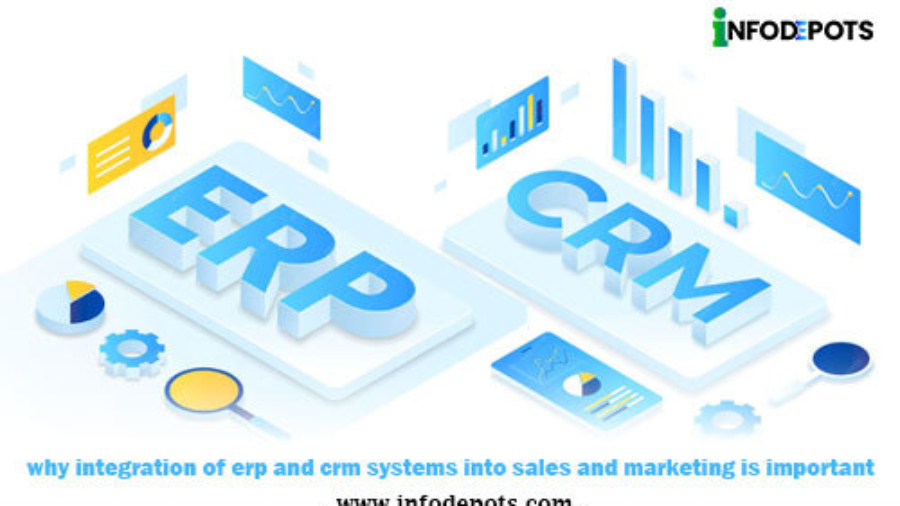
ERP & CRM

Why Integration of ERP and CRM Systems Into Sales and Marketing is Important?

In the dynamic landscape of today’s business world, effective communication and collaboration between departments are crucial for driving success. When teams work together effortlessly, they not only enhance productivity but also pave the way for innovative solutions that propel the entire organization forward. Two of the most crucial systems that drive efficiency, profitability, and customer satisfaction are Enterprise Resource Planning (ERP) systems and Customer Relationship Management (CRM) systems. When integrated into sales and marketing functions, these systems help businesses streamline operations, improve data visibility, and enhance customer experience.

In this blog, we will discuss why it is important for modern businesses to integrate ERP and CRM systems into their sales and marketing efforts. We will also show how Infodepots, a company that provides data-driven marketing solutions, helps businesses get better sales and marketing results through this integration.

Understanding ERP and CRM Systems

Before diving into the integration aspect, let’s briefly understand what ERP and CRM systems are and how they benefit sales and marketing teams individually:

  • ERP (Enterprise Resource Planning) Systems: These are comprehensive business management software solutions. They help businesses automate and integrate core processes such as finance, HR, inventory, supply chain, procurement, and more. By consolidating data across the organization, ERP systems provide managers and decision-makers with a unified view of business operations. This further enables them to make more informed decisions.
  • CRM (Customer Relationship Management) Systems: CRM systems, on the other hand, focus on managing interactions with current and potential customers. By tracking customer data, behaviors, interactions, and preferences, CRMs help sales and marketing teams better understand customer needs, nurture leads, close deals, and improve customer retention.

While ERP and CRM systems serve different purposes, they are complementary. When integrated, they create a powerful ecosystem that drives business efficiency and growth.

Key Reasons Why Integration of ERP and CRM Systems Into Sales and Marketing is Important?

1. Unified Data for Better Decision-Making:

One of the most significant advantages of integrating ERP and CRM systems is the availability of a unified data source. Sales and marketing teams often operate with disparate data sets. This leads to inefficiencies, confusion, and errors. By integrating ERP and CRM, businesses can consolidate customer data, sales data, inventory levels, and financial data into a single platform.

This unified view enables decision-makers to make data-driven choices. For example, identifying profitable customer segments, optimizing inventory management, and adjusting pricing strategies based on real-time insights. It also allows teams to assess the effectiveness of marketing campaigns and sales efforts in real time, which is crucial for adapting strategies promptly.

2. Improved Customer Experience and Personalization:

With both ERP and CRM data at their disposal, sales and marketing teams can offer a more personalized experience to customers. For example, a CRM system can provide detailed customer profiles, while the ERP system can offer insights into past purchases, delivery schedules, and payment history.

When integrated, this data helps marketing teams send highly targeted messages and personalized offers based on the customer’s previous interactions, preferences, and purchase history. For sales teams, it ensures they have all the relevant customer details when communicating, leading to more meaningful and productive conversations. Ultimately, this results in better customer satisfaction and loyalty.

3. Streamlined Lead Management and Sales Process:

The integration of ERP and CRM systems ensures that the sales and marketing teams are on the same page when it comes to managing leads and customer relationships. In many organizations, sales leads are generated through marketing efforts, and the sales team needs to have access to all the information they need to follow up and close deals.

With integrated systems, marketing teams can seamlessly hand off leads to sales teams with all relevant information, such as the lead’s behavior, preferences, and past interactions. Sales teams can then use the ERP data to understand the client’s financial situation, previous purchases, and inventory needs, which makes it easier to close deals faster.

4. Enhanced Reporting and Analytics:

Another key benefit of integrating ERP and CRM systems is the ability to access comprehensive and accurate reporting and analytics. Sales and marketing teams can monitor key performance indicators (KPIs) such as conversion rates, customer acquisition costs, sales performance, and customer lifetime value.

With real-time reporting, businesses can evaluate the effectiveness of their strategies and campaigns, adjust budgets, and forecast future performance. Additionally, these insights allow businesses to track and optimize the entire sales pipeline from lead generation to customer retention, ensuring continuous improvement in sales and marketing efforts.

5. Operational Efficiency and Cost Savings:

Integration of ERP and CRM systems helps streamline internal processes by eliminating duplicate data entry, reducing manual errors, and improving cross-departmental communication. For example, when sales teams enter customer orders into the CRM system, that data can be automatically transferred to the ERP system to handle inventory, invoicing, and order fulfillment.

This seamless flow of information reduces the chances of mistakes, ensures faster order processing, and enhances operational efficiency. Over time, these improvements can translate into significant cost savings and a better bottom line.

6. Seamless Communication Across Departments:

Sales, marketing, and other departments like finance and customer service need to collaborate effectively to deliver great customer experience. An integrated ERP and CRM system eliminates silos by providing all departments with access to up-to-date information. This ensures that marketing efforts align with sales objectives, and both teams can work together to address customer needs and concerns in real-time.

For example, marketing teams can monitor customer feedback and reviews, while sales teams can access this information to adjust their approach and respond to customer inquiries. Similarly, the finance department can track orders and invoices, ensuring smooth transactions for customers and minimizing delays.

How Infodepots Plays a Role in Enabling Seamless Integration?

At Infodepots, we understand the power of data-driven decision-making and the vital role that technology plays in achieving business success. As a leading provider of marketing solutions, we specialize in helping businesses leverage integrated ERP and CRM systems to unlock new growth opportunities and improve sales and marketing outcomes.

Here’s how we can support your business in integrating ERP and CRM systems:

  1. Data Integration and Centralization: We help businesses integrate various data sources, including ERP and CRM, to create a centralized platform where all information can be accessed and analyzed in real time.
  2. Targeted Marketing Campaigns: Our data-driven marketing solutions enable you to run personalized and highly targeted campaigns by leveraging customer data from both ERP and CRM systems. This ensures that your messages resonate with the right audience at the right time.
  3. Lead Nurturing and Automation: Infodepots implements lead nurturing strategies by automating follow-ups and streamlining lead management between marketing and sales teams. This improves conversion rates and accelerates the sales cycle.
  4. Advanced Analytics and Reporting: With Infodepots’ expertise, you can access detailed performance reports and actionable insights that help optimize sales and marketing strategies. We empower you to track KPIs, measure campaign success, and make data-driven decisions that drive revenue growth.
  5. Sales and Marketing Alignment: We facilitate better collaboration between your sales and marketing teams, ensuring that they work from the same set of information. This alignment helps achieve common goals and provides a cohesive customer experience.

Conclusion

In today’s competitive market, the integration of ERP and CRM systems into sales and marketing is not just a luxury but a necessity for business growth. By creating a unified data ecosystem, businesses can enhance decision-making, improve customer experience, streamline processes, and achieve better operational efficiency.

At Infodepots, we are committed to helping businesses leverage the full potential of ERP and CRM system integration to maximize sales and marketing performance. Our expertise in data-driven marketing solutions ensures that your business stays ahead of the curve and achieves sustainable growth.

If you’re looking to enhance your sales and marketing efforts through ERP and CRM integration, contact Infodepots today, and let us help you unlock your business’s full potential!

Oil and Gas Industry Email List

How Can the Oil and Gas Industry Email Lists Connect You Effortlessly with Industry Leaders?

In today’s fast-paced business world, establishing meaningful connections is essential to drive growth and build long-lasting partnerships. For oil and gas sector marketers, connecting with the right people can be a game-changer. One of the most effective tools at your disposal? The Oil and Gas Industry Email List.

What Is an Oil and Gas Industry Email List?

An Oil and Gas Industry Email List is a comprehensive database containing contact details of key decision-makers, industry leaders, and influential professionals within the oil and gas sector. This list typically includes email addresses, phone numbers, job titles, company names, and other important information. This helps businesses identify and target the right people for their products or services.

How Oil and Gas Industry Email Lists Help Connect with Industry Leaders?

Establishing connections with the right contacts in a niche industry like oil and gas can be a significant challenge. Traditional methods of outreach often fail to cut through the noise. Using a curated Oil and Gas Industry Mailing List gives you direct access to decision-makers who can influence purchasing decisions. Here’s how these email lists connect you effortlessly with industry leaders:

  1. Precision Targeting: A specialized Oil and Gas Industry Mailing List allows you to filter contacts based on criteria such as company size, role, location, and other relevant factors. This ensures that your outreach is highly targeted and reaches individuals who are more likely to be interested in what you offer.
  2. Time and Cost Efficiency: Instead of wasting time and money on broad marketing campaigns that don’t work, focus on industry leaders who can make decisions. The Oil and Gas Industry Email List saves you from cold-calling or sending emails to irrelevant contacts.
  3. Building Long-Term Relationships: Email is one of the most direct and personal forms of communication. By reaching out to industry leaders with tailored messages via a precise Oil and Gas Industry Email List, you can begin to establish rapport and build valuable long-term relationships.
  4. Fast Communication: With email, you can communicate with industry leaders instantly. An Oil and Gas Industry Email List provides a fast channel for sharing important information, announcements, or offers that can catch the attention of potential business partners or customers.

How Infodepots Is Helping Marketers Connect with Industry Leaders?

At Infodepots, we understand the importance of reaching the right people at the right time. We specialize in providing high-quality, accurate, and customized Oil and Gas Industry Mailing Lists that help marketers connect with top decision-makers in the oil and gas industry.

Our lists are meticulously researched and regularly updated to ensure that marketers have access to the most current and relevant contacts. Whether you need a specific list based on geographic location, job title, or company size, Infodepots offers tailored solutions to meet your unique needs.

By choosing Infodepots, you not only get access to industry-specific Oil and Gas Industry Email Lists but also gain the advantage of our expertise in data-driven marketing. We help streamline your outreach efforts and ensure that your communications land in the inboxes of the right people—industry leaders who can drive your business forward.

Conclusion

Connecting with the right people in the oil and gas industry can be easy. With the right Oil and Gas Industry Email Lists, you can reach industry leaders, improve your communication, and build strong business relationships. Infodepots offers high-quality, customized mailing lists to support your marketing efforts.

Ready to take your outreach to the next level? Contact us today to get started!

Unlock the potential of the oil and gas industry, get your custom email list from Infodepots, and start connecting with decision-makers today!

Email marketing tips for physicians and medical professionals USA

The Best Email Marketing Tips for Physicians and Medical Professionals

In today’s fast-paced digital landscape, effective communication is paramount, especially for healthcare providers. While traditional marketing still has its place, email marketing has emerged as a powerful, cost-effective, and highly personalized channel for physicians and medical professionals to connect with their audience. It’s not just about sending newsletters; it’s about building relationships, fostering trust, and keeping your practice top-of-mind.

If you’re looking for the best email marketing tips for physicians and medical professionals, you’ve come to the right place. This detailed guide will walk you through strategies to create impactful campaigns, reach your target audience effectively, and ultimately grow your practice.

Why Email Marketing is Crucial for Healthcare Professionals?

In a world brimming with information, directly reaching your patients and peers can be a challenge. Email marketing offers a direct line, cutting through the noise of social media and search results. It allows for:

  • Personalized Communication: Deliver tailored content based on patient needs, interests, or medical conditions.
  • Building Trust and Credibility: Share valuable health tips, research, and insights, positioning yourself as a trusted authority.
  • Patient Engagement and Retention: Send appointment reminders, follow-ups, and educational content to keep patients engaged and loyal.
  • Promoting Services and Events: Announce new services, special offers, workshops, or community health initiatives.
  • Cost-Effectiveness: Achieve significant reach and engagement without the hefty price tag of traditional advertising.

Email Marketing Tips for Targeting Physicians and Medical Professionals

Whether you’re reaching out to existing patients or aiming to connect with referring physicians, the core principles of effective email marketing remain similar, with some crucial nuances for the healthcare sector.

1. Build a High-Quality, Opt-In Email List

This is the bedrock of any successful email campaign. For Email Marketing Tips for Targeting Physicians and Medical Professionals, it’s crucial to focus on building a list of genuinely interested individuals.

  • Patient Opt-Ins: When new patients fill out forms (digital or paper), include a clear opt-in checkbox for promotional emails, newsletters, or health tips. Ensure it’s separate from consent for medical treatment.
  • Website Forms: Strategically place opt-in forms on your website, particularly on blog posts, service pages, and contact pages. Consider offering valuable incentives like a free health guide, a checklist, or access to exclusive content in exchange for an email address.
  • In-Office Sign-ups: Have a tablet or sign-up sheet in your waiting room.
  • Professional Events: Collect business cards or email addresses at conferences, workshops, and networking events, always with explicit permission to add them to your mailing list.

2. Segment Your Audience for Personalized Messaging

Generic emails rarely resonate. Tips on Email Marketing for Doctors & Healthcare Professionals emphasize the power of segmentation. Divide your email list into smaller, more specific groups based on relevant criteria:

  • Patient Type: New patients, existing patients, specific conditions (e.g., diabetic patients, expecting mothers).
  • Demographics: Age, gender, location (especially for Email marketing tips for physicians and medical professionals USA, focusing on local outreach).
  • Engagement Level: Active subscribers vs. those who haven’t opened emails recently.
  • Referring Physicians (for B2B): Segment by specialty, referral history, or shared interests.

This allows you to send highly relevant content, increasing open rates and engagement.

3. Craft Compelling Subject Lines

Your subject line is the gatekeeper. It determines whether your email gets opened or sent to the trash.

  • Be Clear and Concise: Physicians and medical professionals are busy. Get straight to the point.
  • Create Urgency/Curiosity (subtly): “New Research on [Condition]” or “Important Update Regarding Your Care.”
  • Personalize: Include the recipient’s name or a relevant specialty if possible.
  • Avoid Spam Triggers: Steer clear of excessive capitalization, exclamation marks, or overly salesy language.

4. Provide Valuable, Engaging Content

Your emails should always offer value. For how to create email campaigns for physicians and medical professionals, think beyond promotions.

  • Educational Content: Share articles on common health concerns, new treatment options, preventive care tips, or insights from recent medical studies.
  • Practice Updates: Announce new services, equipment, expanded hours, or welcome new team members.
  • Patient Stories/Testimonials: With proper consent and HIPAA compliance, sharing positive patient experiences can build trust.
  • Event Invitations: Promote health seminars, free screenings, or online webinars.
  • Behind-the-Scenes: Share a glimpse into your practice’s culture or introduce your staff.
  • Thought Leadership (for B2B): Share case studies, whitepapers, or expert opinions on industry trends relevant to referring physicians.

Remember to use clear, jargon-free language for patient-facing emails and a professional, evidence-based tone for peer-to-peer communication.

5. Optimize for Mobile Devices

A significant portion of emails are opened on mobile phones. Ensure your emails are responsive and look good on all screen sizes. This includes:

  • Single-Column Layouts: Easier to read on small screens.
  • Large, Readable Fonts: Avoid tiny text.
  • Clear Call-to-Action (CTA) Buttons: Make them easy to tap.
  • Optimized Images: Compress images to ensure fast loading times.

6. Implement Automation for Efficiency

Email automation can save you significant time and ensure consistent communication.

  • Welcome Series: Automatically send a series of emails to new subscribers, introducing your practice and its services.
  • Appointment Reminders and Follow-ups: Reduce no-shows and improve patient adherence.
  • Birthday Greetings: A simple, personalized touch that builds goodwill.
  • Re-engagement Campaigns: Target inactive subscribers with special offers or valuable content to bring them back.

7. Track and Analyze Your Performance

Measure the success of your campaigns to continually refine your strategy. Key metrics include:

  • Open Rate: Percentage of recipients who open your email.
  • Click-Through Rate (CTR): Percentage of recipients who click on a link in your email.
  • Conversion Rate: Percentage of recipients who complete a desired action (e.g., book an appointment, download a resource).
  • Bounce Rate: Percentage of emails that couldn’t be delivered.
  • Unsubscribe Rate: Track this to understand if your content is relevant.

8. Ensure HIPAA Compliance and Data Privacy

This is paramount in healthcare email marketing. Always prioritize patient privacy and adhere to regulations like HIPAA in the USA.

  • Obtain Explicit Consent: Always get clear permission to send marketing emails.
  • Avoid Sharing PHI (Protected Health Information): Do not include sensitive patient data directly in emails. If you must refer to health information, direct users to secure patient portals or use encrypted methods.
  • Secure Platforms: Use email marketing platforms that offer robust security features and are HIPAA compliant.
  • Include Unsubscribe Option: Every email must have an easy-to-find unsubscribe link.
  • Clear Privacy Policy: Make your privacy policy easily accessible on your website, explaining how patient data is used.

How INFO DEPOTS Can Elevate Your Email Marketing?

Crafting effective email campaigns begins with reaching the right people. This is where a trusted partner like INFO DEPOTS becomes invaluable. As a leading B2B data lists for marketing and custom data provider, INFO DEPOTS is dedicated to helping businesses across the USA and globally to create the perfect brand image with genuine contacts.

We understand the unique needs of the healthcare sector. Our meticulously curated Healthcare Email and Mailing Lists offer access to verified contacts of physicians, specialists, hospital administrators, and other medical professionals. With INFO DEPOTS, you can:

  • Access Targeted Data: Obtain highly segmented lists based on specialty, location, practice size, and more, ensuring your message reaches the most relevant audience.
  • Ensure Data Accuracy: Our commitment to genuine contacts means you minimize bounce rates and maximize deliverability, saving you time and resources.
  • Build a Strong Foundation: Start your email marketing efforts with a reliable database, allowing you to focus on crafting compelling content rather than hunting for contacts.
  • Expand Your Reach: Connect with potential referral sources and collaborators, expanding your professional network and patient base.

By leveraging INFO DEPOTS’ expertise, you gain a significant advantage in implementing the best email marketing tips for physicians and medical professionals, ensuring your campaigns are built on a foundation of quality and precision.

Are you ready to elevate your medical practice? Connect with INFO DEPOTS today for a tailored Healthcare Database and unlock the power of precision-targeted email marketing. Transform your outreach and build lasting professional connections with genuine contacts.

Data Cleansing vs Data Enrichment

What is the Difference Between Data Cleansing vs Data Enrichment?

In today’s data-driven economy, businesses thrive on the quality of their information. Clean, complete, and up-to-date B2B data plays a critical role in making informed decisions, personalizing marketing strategies, and driving revenue. Two essential processes that ensure data quality are Data Cleansing and Data Enrichment. Though often used interchangeably, these processes serve distinctly different purposes.

Understanding the difference between the two can help you build a robust data-cleansing strategy and unlock the full potential of your marketing and sales initiatives.

What is Data Cleansing?

Data Cleansing, also known as database cleansing, refers to the process of detecting and correcting (or removing) inaccurate, incomplete, duplicate, or irrelevant data from a database. The goal of data cleansing is to improve data accuracy and reliability so that it supports efficient operations and data-driven decisions.

Key Aspects of the Data Cleaning Process:

  • Standardization: Formatting phone numbers, addresses, and names consistently.
  • Deduplication: Identifying and removing duplicate records.
  • Validation: Verifying data accuracy using reliable sources.
  • Error Correction: Fixing typos, null values, and incorrect entries.

Businesses that invest in data cleaning services benefit from enhanced customer segmentation, streamlined operations, and improved marketing ROI. For B2B enterprises, B2B data cleansing is especially crucial because inaccurate data can lead to missed opportunities and wasted resources.

What is Data Enrichment?

Data Enrichment involves enhancing existing data by adding new, relevant information. It supplements raw data with external or internal datasets to provide a fuller, more insightful view of customers, prospects, or business entities.

Common Data Enrichment Use Cases:

  • Appending missing contact details, like job titles or email addresses.
  • Adding firmographic data such as company size, revenue, or industry classification.
  • Supplementing behavioral data like purchase history or web interactions.

Data enrichment services are widely used in data enrichment in marketing to create more targeted and personalized campaigns. For B2B companies, B2B data enrichment provides sales and marketing teams with comprehensive customer profiles, enabling more effective outreach.

Data Cleansing vs Data Enrichment: What’s the Difference?

While both processes aim to improve data quality, they do so in different ways and at different stages of the data lifecycle.

  Feature    Data Cleansing  Data Enrichment
  Purpose    Improve data accuracy by removing errors    Enhance data by adding new information
  Focus    Internal data quality  External data supplementation  
  Example    Removing duplicate entries    Adding missing job titles or LinkedIn profiles
  Outcome    Reliable and consistent datasets    Deeper customer insights and segmentation
  Frequency    Ongoing maintenance  Campaign or project-specific or periodic  

Together, these processes form the foundation of an effective data cleansing strategy and broader data management framework.

Why Both Are Essential for B2B Success?

B2B companies operate in a high-stakes, high-value environment where poor data quality can severely impact performance. Clean data ensures your campaigns are reaching real, relevant contacts. Enriched data adds depth to your buyer personas, allowing for personalized and timely communications.

Whether you’re a startup scaling your outreach or an enterprise optimizing your CRM, combining data cleaning services with data enrichment services will dramatically improve customer targeting, reduce bounce rates, and increase conversion rates.

How INFO DEPOTS is Powering Growth with Accurate B2B Data?

INFO DEPOTS understands the power of accurate, actionable data. As a leading data-driven marketing services provider, we specialize in both B2B data cleansing and B2B data enrichment to help businesses across the USA and beyond expand their brand reach.

Our expert teams use cutting-edge tools and proven techniques to:

  • Clean and verify your B2B database through a structured data-cleaning process
  • Enrich your records with fresh, high-value insights like decision-maker contacts, industry data, and firmographics
  • Tailor your data quality strategy for your specific marketing and sales goals

With INFO DEPOTS, you get more than just data — you get a reliable growth partner committed to driving your business forward.

Ready to Clean, Enrich, and Grow?

Don’t let bad data slow you down. Partner with INFO DEPOTS to transform your database into a revenue-generating engine. Let’s clean it, enrich it, and convert more leads — faster, smarter, and better.

Start your data transformation journey today with INFO DEPOTS – where clean meets complete, and your growth begins.

Best Time to Send an Email Campaign

What is the Best Time to Send an Email Campaign?

Email marketing remains one of the most effective ways to reach your target audience, nurture leads, and drive conversions. But here’s the catch: even the most compelling content can go unnoticed if it arrives in your subscriber’s inbox at the wrong time. So, what is the best time to send an email campaign?

The timing of your emails can significantly impact open rates, click-through rates, and overall campaign success. In this blog, we’ll explore the best time to send an email campaign, what factors influence engagement, and how Infodepots helps businesses across the USA and beyond to optimize their outreach.

Why Timing Matters in Email Campaigns?

With crowded inboxes and short attention spans, your email has only seconds to make an impact. That’s why understanding what’s the best time to send out an email campaign is essential for marketers looking to boost visibility and response rates.

According to various studies, email open and click-through rates can vary greatly depending on the day and time an email is sent. The same content sent at 9 AM versus 3 PM can yield different results.

So, What is the Best Time to Send an Email Campaign?

There isn’t a one-size-fits-all answer, but here’s what research and experience commonly suggest:

Best Time of Day:

  • Mid-Morning (9 AM – 11 AM): This is when most professionals start their day and check their inboxes. It’s often considered the best time to send an email campaign for B2B audiences.
  • Early Afternoon (1 PM-3 PM): This time is ideal for follow-up emails and newsletters, especially after lunch when people are back at their desks.

Best Day of the Week:

  • Tuesday and Thursday consistently rank as the best days to send an email marketing campaign. These mid-weekdays strike a balance—people are out of the Monday rush and not yet thinking about the weekend.
  • Wednesday is another strong contender, often yielding stable engagement metrics.

Times to Avoid:

  • Late Friday afternoons and weekends tend to underperform, especially in B2B contexts. Professionals are winding down or away from work.

Factors That Influence the Best Send Time

While these general guidelines help, the good time to send email campaign can vary based on:

  • Industry: E-commerce might perform better on weekends, while B2B shines mid-week.
  • Audience behavior: Use A/B testing and analytics to determine when your audience is most responsive.
  • Geographic location: Consider time zones, especially for national or global campaigns.
  • Device usage: Mobile users may check emails at different times compared to desktop users.

How Infodepots Helps You Hit the Sweet Spot?

At Infodepots, we don’t just provide high-quality Email Marketing Lists and B2B Contact Databases — we help businesses launch successful marketing campaigns by offering data-driven insights into audience behavior.

Here’s how we empower you:
  • Targeted contact lists segmented by industry, job role, and location.
  • Real-time analytics to refine your campaign schedule.
  • Strategy consultations to help you determine the best time to send an email campaign.
  • Ongoing support for list management, campaign design, and performance tracking.

Businesses across the USA and around the globe rely on Infodepots to maximize their marketing ROI and connect with the right people at the right time.

Final Thoughts

Understanding what is the best time to send an email campaign is a critical factor in your marketing success. Whether you’re trying to re-engage past leads or announce a new product, timing can make all the difference. Combine optimal timing with targeted lists and expert support from Infodepots, and you’re on your way to higher open rates and better results.

Ready to Supercharge Your Email Campaigns?

Get access to high-quality leads, expert strategies, and powerful tools with Infodepots. Launch your next email campaign with confidence — and at the perfect time. Let’s boost your ROI today!